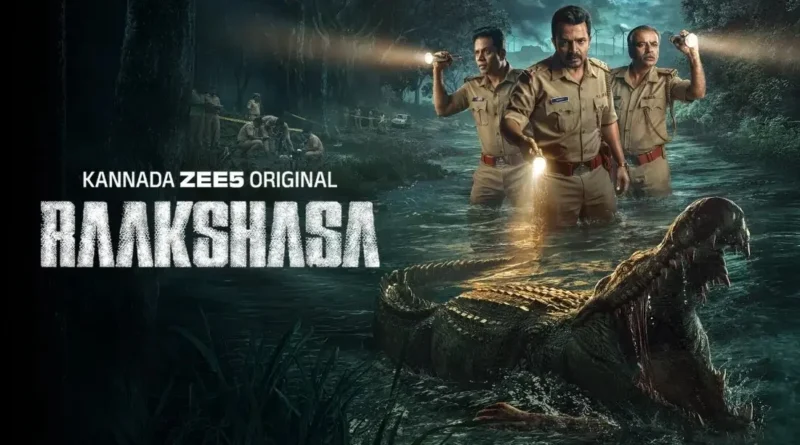
Rakshasa Kannada Web Series Review: Is This ZEE5 Crime Drama Worth Watching?
The Kannada streaming space has changed quickly in the last few years. What began as cautious experiments has now turned into confident, rooted storytelling. Filmmakers are no longer trying to imitate metro-centric thrillers or glossy crime dramas from other industries. Instead, they are digging into local soil, dialects, and lived realities. In that context, Rakshasa arrives at the right time. This Rakshasa Kannada web series review looks at how the show fits into this new wave and whether it truly stands out or simply rides the trend.
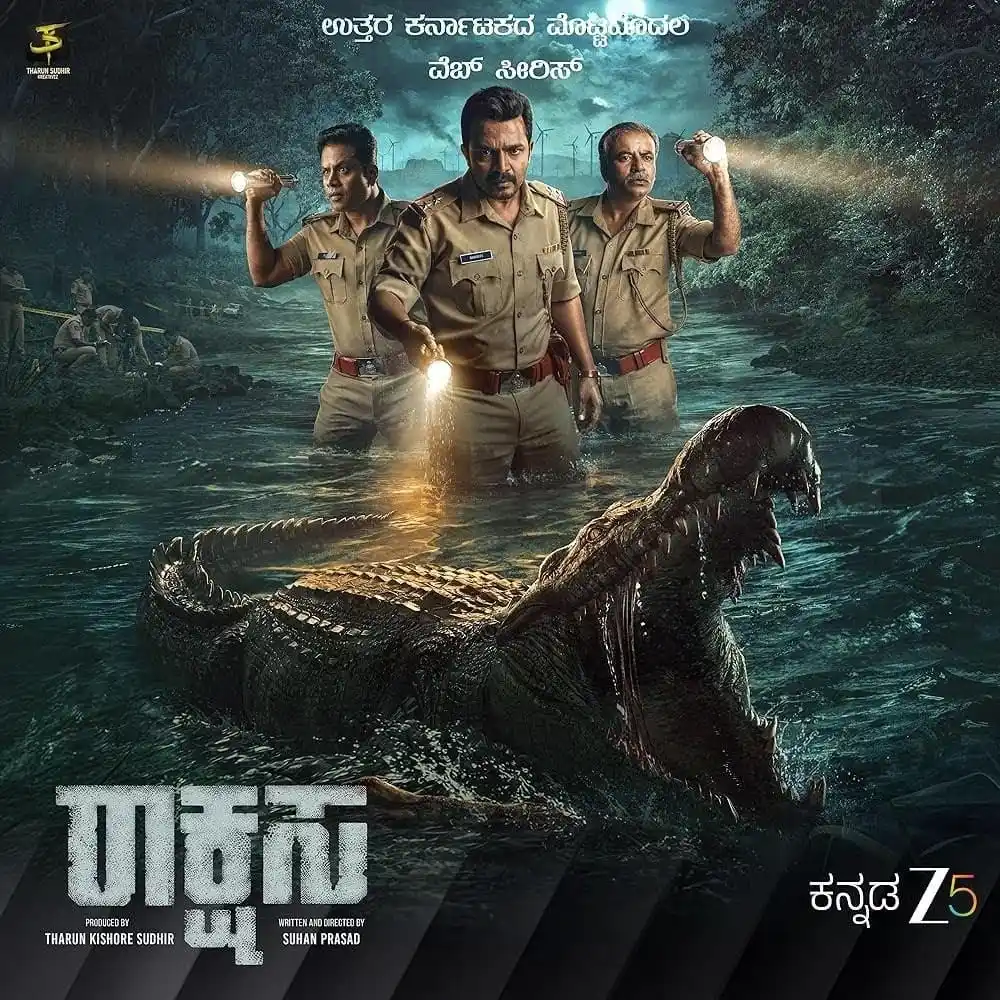
Released on ZEE5 on February 20th, 2026, produced by Tharun Sudheer and directed by Suhan Prasad, the seven-episode series adapts the Tamil show Vilangu. At its centre is Sub-Inspector Hanmappa, played by Vijay Raghavendra, navigating a case that begins with what appears to be a crocodile attack in the river belt of Savadatti near the Malaprabha.
Rakshasa (2026)
- PlatformZEE5
- LanguageKannada
- Episodes7
- GenreCrime, Procedural Thriller
- DirectorSuhan Prasad
- ProducerTharun Sudheer
- Lead CastVijay Raghavendra
- SettingSavadatti, North Karnataka
Plot and Setting: Crime by the River
The premise sounds straightforward. A body surfaces. The locals whisper about crocodiles. The river becomes both a physical and symbolic presence. But the show is less interested in jump scares and more invested in tension that builds slowly.
Set in rural North Karnataka, the series makes strong use of geography. The Malaprabha riverbanks are not just backdrops. They feel lived in. The dust, the dry wind, the tight-knit community, and the heavy silences all add weight to the investigation. The North Karnataka dialect plays a major role. Characters speak the way people from that region actually speak, without smoothing out rough edges for a wider audience. This choice gives the show credibility, even if it demands a little more attention from viewers unfamiliar with the accent.
Without giving away spoilers, the so-called crocodile attack soon opens up into something more layered. The mystery grows in complexity, and what seems like an accident begins to reveal human motives, secrets, and buried tensions. The writing avoids loud twists. Instead, it prefers a steady tightening of the knot.
The Adaptation Factor: Copy or Cultural Shift?
Whenever a regional adaptation is announced, the first fear is obvious. Will it be a scene-by-scene remake, or will it reinterpret the material meaningfully?
Rakshasa takes the core structure of Vilangu but reshapes its emotional texture. The Tamil original had its own social landscape and police dynamics. Here, the shift to North Karnataka changes the rhythm. The power structures, the local politics, and the social hierarchies feel specific to the region.
Also Read: Second Case Of Seetharam Movie Review: Strong Sequel or Just Average?
Suhan Prasad does not simply transplant the plot. He adapts it to suit Kannada sensibilities. The superstition around the river, the way villagers react to authority, and even the body language of the police station scenes feel rooted in local experience. That said, viewers who have watched the original may still sense the underlying blueprint. The broad narrative beats remain recognisable. The strength of Rakshasa lies not in reinventing the wheel but in making that wheel roll convincingly on Kannada terrain.
Performance Deep-Dive
Vijay Raghavendra as SI Hanmappa
This Rakshasa web series review would be incomplete without examining Vijay Raghavendra’s performance. As SI Hanmappa, he plays a man who is neither heroic nor incompetent. He is tired, pressured, and often unsure. That vulnerability becomes the character’s defining trait.
Raghavendra resists the temptation to dramatise every emotional beat. His Hanmappa looks overwhelmed by paperwork, local politics, and the expectations placed on him. There are moments where he appears physically smaller in the frame, especially during confrontations with seniors or influential locals. That visual choice complements his restrained acting.
He brings quiet intensity to interrogation scenes. Instead of shouting, he observes. Instead of delivering long speeches, he lets silences hang. It is a mature performance that acknowledges the limits of power within a rural policing system.
Supporting Cast
Mayuri adds emotional grounding. Her presence gives Hanmappa’s personal life dimension without turning it into melodrama. Avinash, in a supporting role, carries authority effortlessly. His scenes often shift the tone of the room with minimal dialogue.
The antagonist, Beerappa, deserves special mention. He is not written as a cartoon villain. His menace lies in unpredictability. The actor plays him with an unsettling calm, which makes certain confrontations genuinely tense. The writing gives him just enough backstory to feel human, without excusing his actions.
Technical Merits
Across seven episodes, pacing becomes crucial. Rakshasa mostly maintains control. The early episodes focus on mood and setup, which may test viewers expecting rapid twists. However, this slower beginning allows the world to settle in. By the mid-point, the narrative gains momentum.
Cinematography stands out, especially in scenes along the riverbanks. Wide shots emphasise isolation, while tighter frames inside the police station create a sense of suffocation. The contrast between open landscapes and cramped interiors mirrors Hanmappa’s mental state.
The background score supports rather than dominates. It does not scream for attention. Instead, it underscores tension quietly, particularly during investigative breakthroughs and confrontations. Silence is used effectively, especially in scenes tied to folklore and fear.
Themes: Belief vs Logic
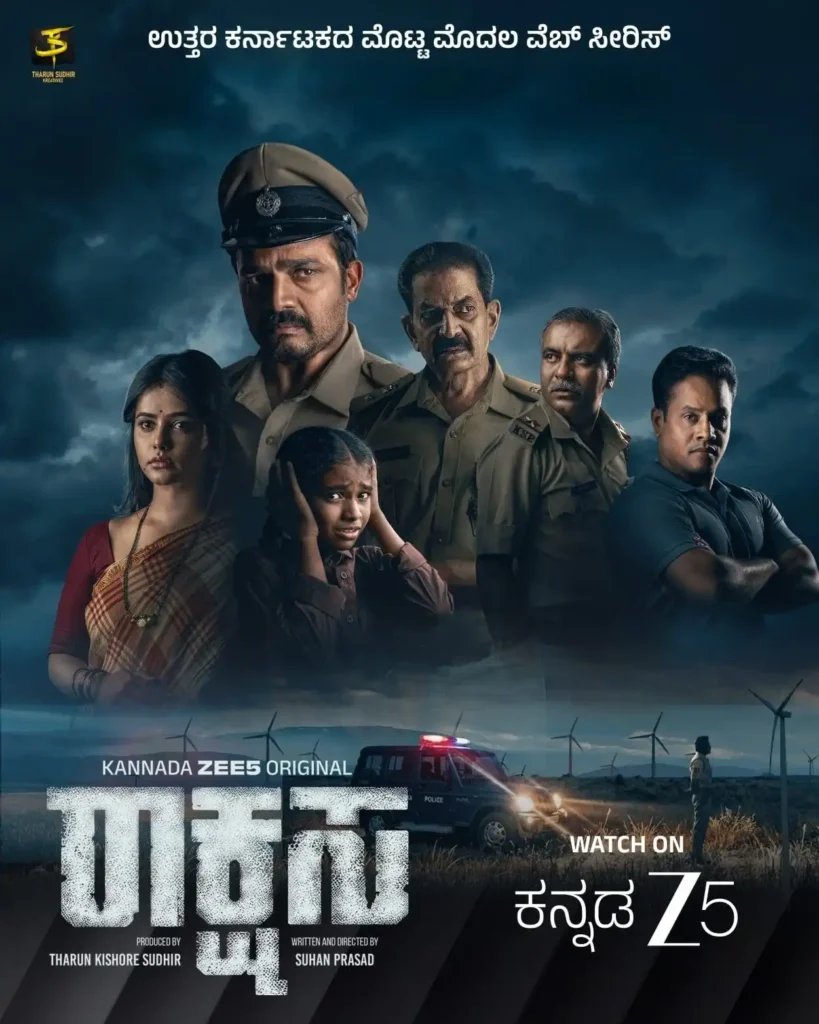
One of the more interesting layers in this Rakshasa Kannada web series is the theme of belief versus logic. The crocodile narrative becomes a symbol of how quickly communities lean into folklore. Rumours spread faster than facts. Fear shapes public opinion long before evidence does.
Hanmappa represents institutional logic. Yet even he is not immune to pressure from public sentiment and political influence. The show suggests that truth is often buried not just by criminals, but by collective belief systems. In rural settings, superstition is not presented as foolishness. It is shown as a coping mechanism in places where information is limited and fear is constant.
This tension between rational investigation and inherited belief gives the series its philosophical edge. It is not just about solving a case. It is about confronting the stories people choose to believe.
Final Verdict
So, does Rakshasa justify its place in the growing Kannada OTT landscape? It works in parts, especially in terms of performances and atmosphere, but it does not consistently rise above its adaptation roots. It may not break new ground structurally, especially for those familiar with Vilangu. While it succeeds in feeling authentic to its setting, the narrative occasionally feels predictable, and the pacing may not work for everyone.
Rating: 3 out of 5
Rakshasa proves that Kannada web content can adapt material while still preserving local identity. It respects its audience enough to avoid oversimplification. For viewers who appreciate slow-burn crime dramas rooted in regional reality, this series is a decent watch, though not a standout.